The Situation
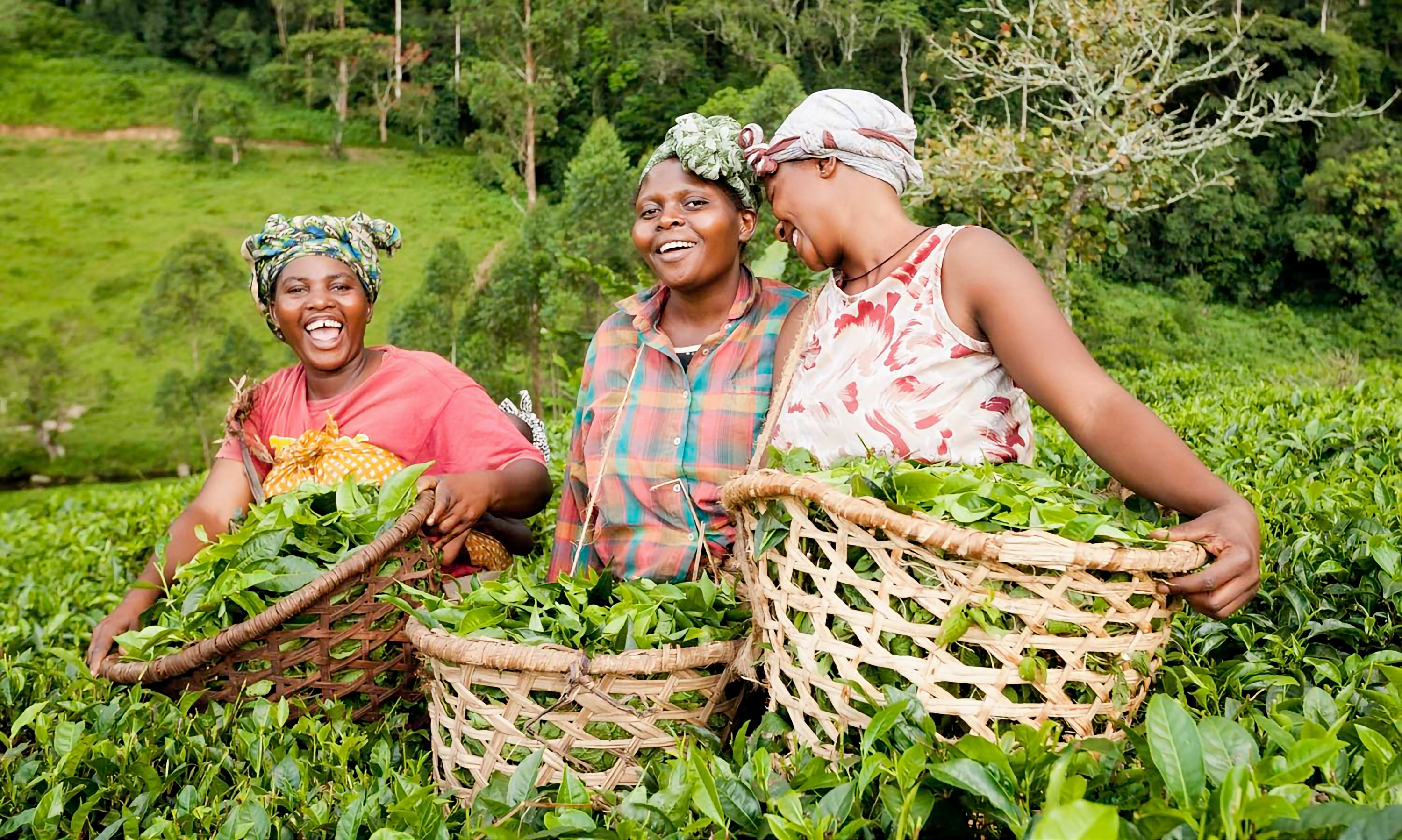
A women-led agricultural cooperative in Nigeria had a credible domestic operating base and exportable product potential, but lacked the commercial infrastructure required to engage international buyers with confidence. The most immediate opportunity centered on white hulled sesame seeds, a product category with clear relevance for buyers in MENA and East Asia.
When Mansa Merch entered the engagement in late January 2026, the cooperative had product strength and supply potential, but not yet the documentation, process discipline, or buyer-facing positioning needed to convert that potential into structured export activity.

The Challenge
The issue was not whether the cooperative had a viable product. It was whether it could present that product in a way that met the expectations of international bulk buyers.
No Export Operating Framework
There were no established workflows for handling inquiries, quoting under standard trade terms, preparing export documentation, or progressing from buyer interest to production planning.
Insufficient Commercial Specificity
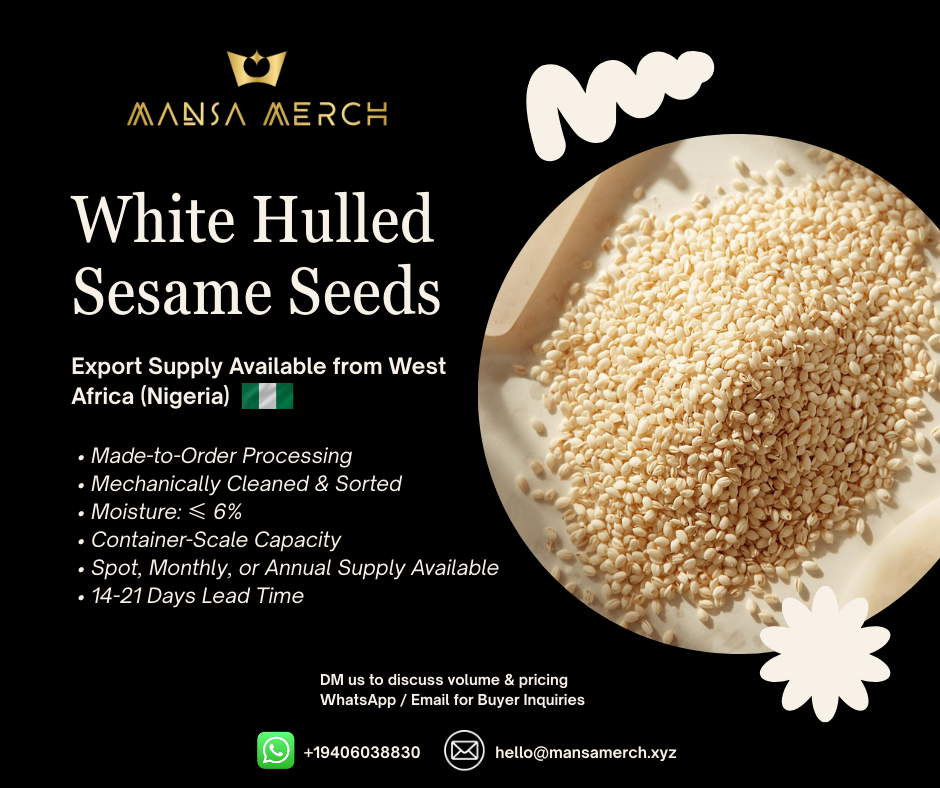
International commodity buyers expect concise, decision-useful information: product type, processing method, moisture specification, supply cadence, lead time, and shipment scale. That level of commercial presentation was not yet in place.
Buyer-Facing Credibility Gap
The cooperative needed to communicate not just that sesame was available, but that supply could be structured around container-scale orders, repeat monthly demand, and export-ready quality expectations.
Market Access Uncertainty
Even with a strong product, the cooperative needed a disciplined framework for prioritizing target markets, qualifying buyer interest, and preparing for repeatable export conversations rather than one-off inquiries.
Our Approach
Mansa Merch structured the engagement as an export-readiness and market-access program built around a real commodity lane rather than a generic export advisory exercise.
Phase 1: Readiness Assessment and Product Commercialization
From late January through February 2026, we assessed the cooperative's current capabilities and helped translate raw production capacity into buyer-facing commercial language.
This moved the cooperative from general export interest to a commercially legible product offer.
Phase 2: Export Readiness Infrastructure
We supported the buildout of the process and communication framework needed to handle real trade discussions. That included export-readiness support around SOPs, documentation flow, buyer communications, and commercially literate quoting logic so the cooperative could engage with more structure and consistency.
Phase 3: Buyer-Facing Positioning and Market Prioritization
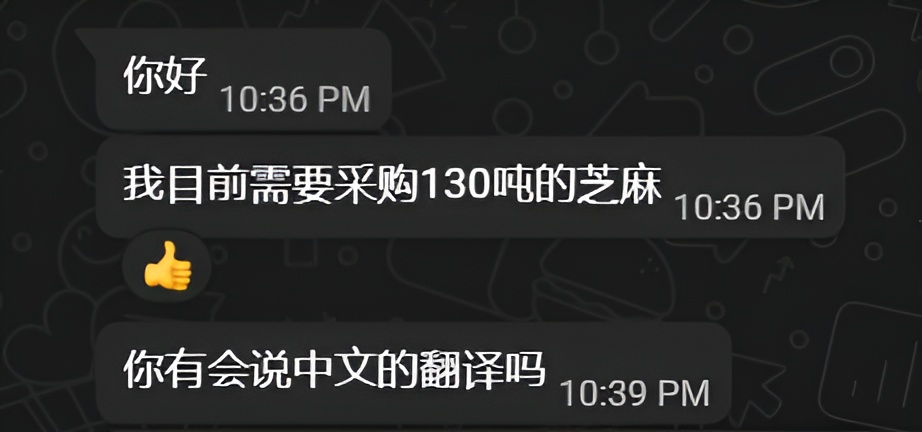
MENA and East Asia were prioritized as target export regions based on likely demand fit for sesame imports, and the outreach posture was built around practical buyer questions: volume, pricing, processing quality, shipment cadence, and lead time.
Phase 4: Contracted Engagement and Buyer Finalization
The engagement was formalized through a signed contract in early February 2026. As of March 2026, buyer-side finalization is underway and production planning is being aligned to actual demand discussions, not speculative export positioning.
Outcomes
| Metric | Result |
|---|---|
| Timeline | Late January through March 2026 |
| Contract Status | Engagement signed early February 2026 |
| Lead Export Lane | White hulled sesame seeds from Nigeria |
| Commercial Readiness | Product offer clarified: processing method, moisture spec, lead time, supply cadence |
| Supply Positioning | Container-scale capability with spot, monthly, and annual flexibility |
| Target Markets | MENA and East Asia prioritized |
| Commercial Result | Buyer finalization in progress as of March 2026 |
| Operational Shift | Cooperative moved from export ambition to structured commodity-export onboarding |
Mansa Merch entered this engagement when the cooperative had a viable agricultural product but lacked the commercial structure required to present it credibly to international buyers. The work was not simply to say sesame was available. It was to define the product in trade terms, organize the supporting process, and create a buyer-facing framework strong enough to support real export conversations. The state at entry was domestic capability without export readiness. The state now is an active, contracted engagement with commercial specifications clarified, target markets prioritized, and buyer finalization underway.