The chokepoint decade
Global trade has always depended on a small number of physical chokepoints. What changed in the 2020s is how often those chokepoints fail, and how fast a single failure cascades into everyone's supply chain.
The clearest anchor is the Ever Given. In March 2021, one container ship grounded and blocked the Suez Canal for six days. Lloyd's List estimated the blockage held up roughly $9.6 billion of trade per day, with a backlog of more than 300 vessels. One vessel. One lane. Billions per day. That is the definition of a single point of failure, and it was not a one-time event.
Since late 2023, attacks on commercial shipping in the Red Sea have forced major carriers to reroute around the Cape of Good Hope, adding roughly 10 to 14 days of transit and significant fuel and insurance cost to each voyage. Suez Canal traffic and Egypt's canal revenue fell sharply through 2024 as a result. Container spot rates spiked as effective capacity tightened.
At nearly the same time, drought tied to El Nino lowered water levels in Gatun Lake, forcing the Panama Canal Authority to cut daily transit slots and impose draft restrictions that limited how much cargo each ship could carry from late 2023 into 2024. Two of the world's most important canals, constrained at once, for completely unrelated reasons.
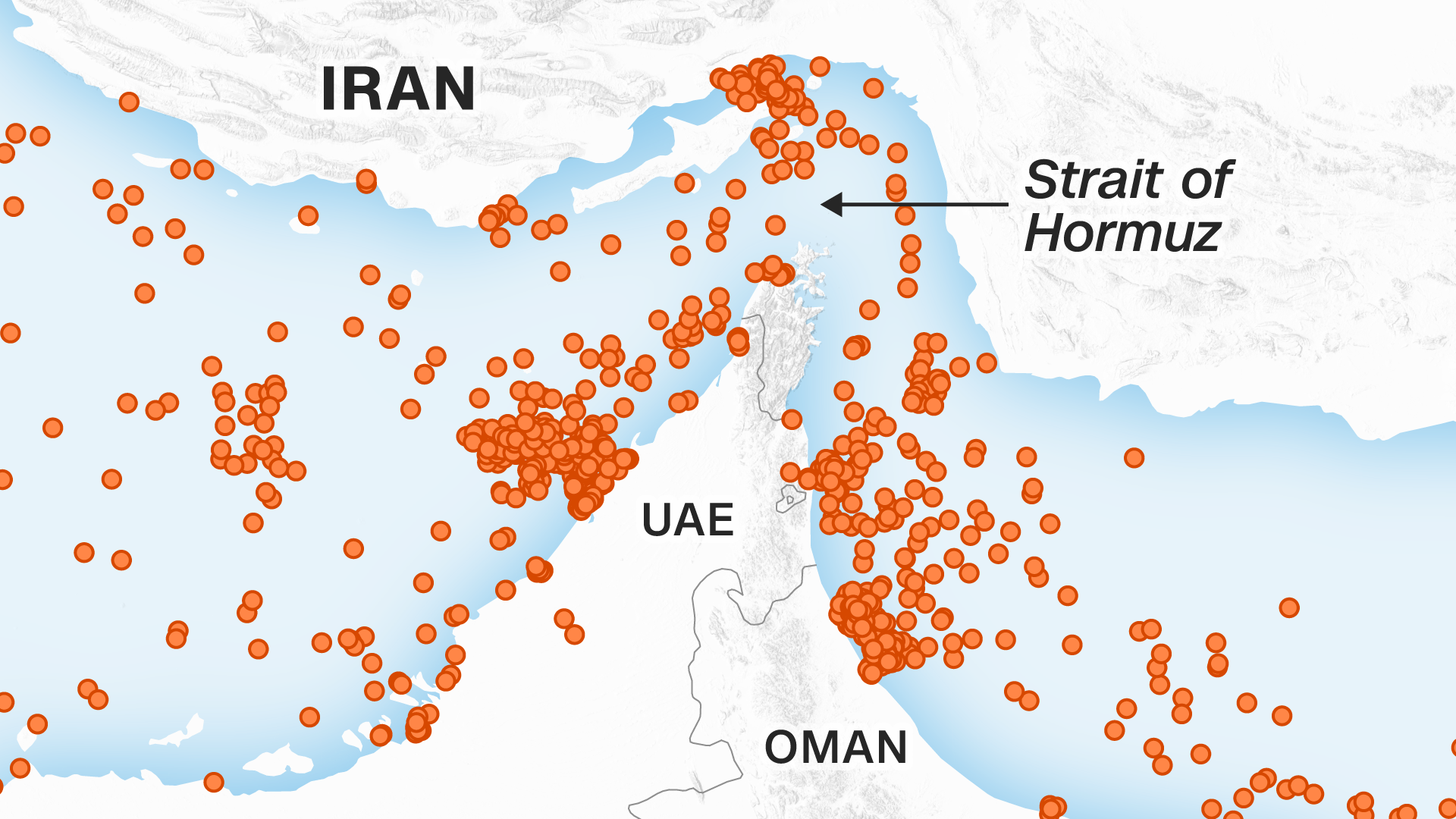
And the Strait of Hormuz remains the single most important oil chokepoint on earth. The US Energy Information Administration estimates that a large share of global seaborne-traded petroleum (on the order of a fifth of global consumption) passes through it. Every flare-up of Middle East tension reprices that risk instantly.
The lesson is not that any one of these will happen on a given Tuesday. It is that something always does. If your sourcing depends on one lane, one supplier, or one chokepoint clearing without incident, you do not have a supply chain. You have a bet.
The political chokepoint: export controls
Physical chokepoints are only half the picture. The other half is policy. A government can close a lane with a regulation as effectively as a grounded ship closes a canal.
China demonstrated this with critical minerals. Per the US Geological Survey, China produces roughly 98% of the world's low-purity gallium and a dominant share of germanium, both essential to semiconductors and defense electronics. When China imposed export controls on gallium and germanium in 2023, then added antimony and tightened graphite and rare-earth magnet controls through 2024 and 2025, it was not blocking a canal. It was achieving the same effect: a sudden, policy-driven supply shock for buyers who had concentrated their sourcing in a single origin.
For any buyer dependent on a single-country source for a critical input, an export-control announcement is a chokepoint event. The goods are physically available. You just cannot get them, because the lane closed for political reasons rather than physical ones.
The fraud chokepoint: when the threat is a counterparty
Not every failure is geographic or political. Some are human. The FBI's Internet Crime Complaint Center reported record losses in its 2024 report, with business email compromise alone accounting for roughly $2.77 billion in reported losses. A large share of BEC targets vendor and supplier payment redirection: an attacker impersonates a known supplier, sends updated banking details, and the buyer wires payment into the wrong account.
This is a chokepoint too, just an invisible one. The deal looks normal until the money is gone. And it thrives specifically in fragmented execution environments where payment instructions live in email, supplier identity is verified by vibe, and there is no controlled record of truth to check a change against.
Why multi-sourcing is the rational response (and why most teams fake it)
The market has reached consensus on the answer. Current procurement research is pointing in the same direction: resilience, supplier visibility, digital execution, and alternative sourcing are no longer side initiatives. INVERTO's 2026 procurement analysis frames volatility, cost pressure, and supplier risk as active operating constraints, while the trade chokepoint data makes the same point from the logistics side. Diversification that only exists at Tier 1, or only as a name on a spreadsheet, is not enough.
We have argued the operational version of this before. In why dual-sourcing is no longer optional, we drew the hard line: if you cannot shift volume within your SLA window without panic pricing, you are not dual-sourced. You have a name on a spreadsheet. Real optionality requires both sources to be qualified, contract-ready, and operationally integrated. That is the difference between resilience and the appearance of resilience.
The software supply chain has the same disease. In our analysis of the March 2026 LiteLLM incident, one compromised dependency exposed thousands of companies through a 40-minute window. Physical chokepoints, policy chokepoints, fraud chokepoints, and software chokepoints are all the same structural failure: too much dependence on a single point that, when it breaks, rewrites commercial reality before anyone can react.
Global trade now carries a fragmentation tax. It shows up as a blocked canal, a drought-constrained transit slot, an export-control announcement, a redirected payment, or a compromised software dependency. The common thread is single points of failure inside a workflow too fragmented to defend. The response is not heroic coordination after the fact. It is structural: verified counterparties so you know who you are dealing with, real multi-sourcing so one lane closing does not stop you, and a controlled execution layer where payments, documents, and terms cannot be silently rewritten. That is the architecture trade needs, and it is the thesis behind Project Meridian.
From diagnosis to system
Three facts now point in the same direction: buyers are diversifying suppliers, procurement is digitizing fast, and central workflow systems need secure-by-design assumptions because any upstream link can fail. The teams that treat these as separate problems will keep paying the fragmentation tax. The teams that treat them as one problem (execution risk that lives between parties) will build or adopt the systems that close the gaps.
That is exactly what we are building with Project Meridian: verified counterparty onboarding, immutable deal terms, gated workflow progression, and a secure document and payment layer designed so that no single failure (physical, political, fraudulent, or digital) automatically becomes your loss.