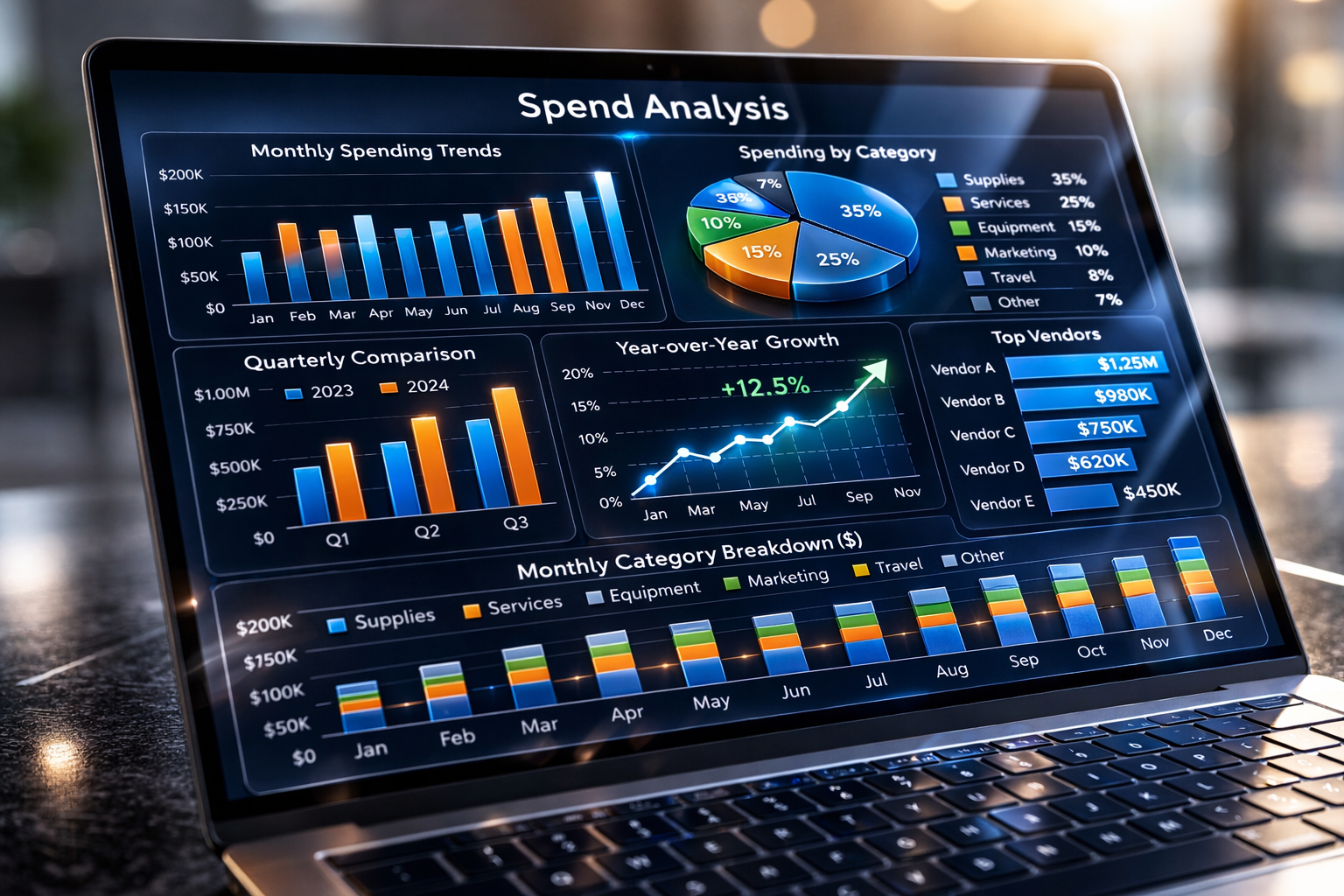
Spend analysis is a risk tool, not just an accounting report
Spend analysis, the systematic examination of what a company spends, with whom, and for what, is foundational to procurement strategy. In practice, robust spend analysis helps organizations see where their money goes, identify cost savings, and reduce unnecessary expenses. But beyond cost reduction, the more strategic application is risk detection.
IBM analysts have noted that spend analytics provides the essential information needed to identify sources of supply risk. By revealing which suppliers or commodities dominate spending, the analysis highlights single points of failure, financially unstable vendors, and concentration risks that only become visible when the data is aggregated and examined.
In one documented case, a procurement manager used spend data to identify that critical components were sole-sourced from a supplier facing financial instability. That early warning prompted contingency sourcing before a disruption could occur. Without the spend analysis, the risk would have remained invisible until the supplier failed to deliver.
What spend analysis actually reveals
Vendor concentration and overdependence
Analyzing spend by supplier or region exposes whether too much procurement relies on a single source or geography. If 60 percent of a component category comes from one vendor or one country, that is a supply chain risk flag. The question is not whether that supplier will have a problem. It is when, and whether you have alternatives ready.
Contract leakage
A well-structured spend analysis tracks on-contract versus off-contract purchases. Finding significant spend outside negotiated contracts indicates overspending, maverick buying, or both. Every dollar spent off-contract is a dollar that bypassed the pricing and terms your procurement team negotiated. In aggregate, this leakage can represent a meaningful percentage of total spend.
Supplier performance correlation
Past spend can be correlated with supplier delivery and quality metrics. If high spend is accompanied by chronic delays or quality non-conformances, the data makes the case for sourcing adjustments, whether that means investing in backup suppliers, renegotiating terms, or exiting the relationship before costs rise further.
Compliance and savings enforcement
By classifying and cleaning spend data, teams can enforce preferred supplier use and capture volume discounts that were negotiated but never fully realized. Category-level analysis and contract compliance tracking are among the highest-value outputs of spend analysis, ensuring that the savings procurement negotiated actually show up in the financial results.
One manufacturer used spend analysis to uncover a 12 percent cost reduction in indirect spend by consolidating redundant vendors and negotiating volume contracts across business units. The savings were there the whole time. It took structured analysis of historical spend data to make them visible and actionable.
From snapshot to continuous intelligence
Spend analysis is most valuable when it is not a one-time exercise but an ongoing operational input. Modern platforms leverage analytics and AI to update dashboards in real time, flagging anomalies like duplicate orders, price discrepancies, or fraud indicators as they occur rather than months after the fact.
In practice, this means procurement teams can detect an overpriced category early by noticing that similar purchases from different suppliers were paid at significantly different rates. By acting on these signals before contracts renew, companies stop overpaying in the future based on patterns identified in the past.
Category managers use spend analysis to plan smarter sourcing and budgeting: breaking down spend by product or service type, spotting volume trends, and aligning negotiations with those trends. A retailer might review quarterly spend by carrier to preempt an upcoming freight cost spike and renegotiate rates before the increase takes effect. By benchmarking actual spend against budget and forecasts, procurement can forecast future needs more accurately and avoid end-of-year overages that nobody budgeted for.
When procurement teams expand spend visibility and transparency through structured analysis, they gain actionable foresight. They can negotiate with data, receive early alerts on supplier and concentration risk, and tighten controls on where money goes. Each dollar spent yields a piece of intelligence. The discipline is turning that intelligence into decisions before the next budget cycle, not after it.
How Mansa Merch uses spend data in client engagements
When we manage procurement projects, we treat historical spend data as one of the first inputs, not an afterthought. Before sourcing begins, we review what the client has been paying, to whom, under what terms, and whether the actual spend aligns with what was negotiated. This baseline shapes how we structure supplier outreach, evaluate quotes, and identify where the real cost reduction opportunities exist. Procurement without spend context is guesswork. We don't operate that way.