The problem we lived before we productized it
Real estate wholesaling looks simple on paper. Find a motivated seller with a distressed, probate, or pre-foreclosure property. Sign a purchase agreement. Assign that contract to a cash buyer for a fee, or close the two transactions back to back. The spread is the profit.
The reality is that the deal moves through a gauntlet of failure points, and most operators are running the entire process out of their phone, a notes app, and a spreadsheet of cash buyers they have not updated in months. Our analysis of why wholesalers lose deals in the current market lays out the macro picture: 6.5% mortgage rates compressing spreads, more selective investor demand, and a growing wave of state licensing and disclosure laws. Against that backdrop, improvised execution is not a small disadvantage. It is the difference between closing and chasing.
We learned this directly. When Mansa Merch ran a pre-foreclosure intervention in North Fontana, California, the deal was time-constrained, the stakeholders were fragmented, and the marketing had to be rebuilt under a 90-day clock. What carried that engagement was not hustle. It was structure: triage the situation, align the parties, control the outreach, track every deadline, and own the outcome. That experience is the DNA of LotLine.
What LotLine is
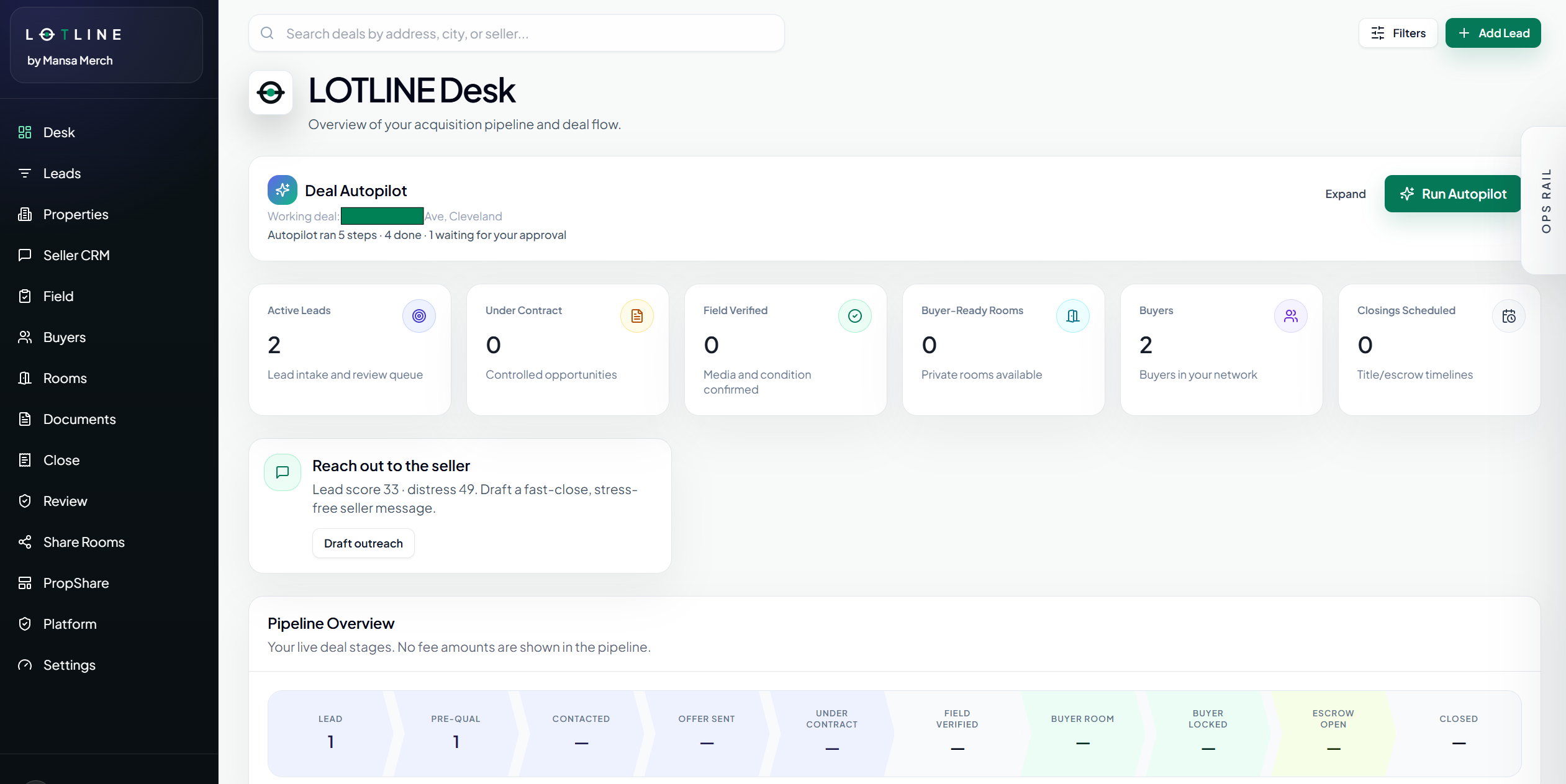
LotLine is an AI-native workspace for real estate wholesalers and distressed-asset operators. It is not "wholesaling made easy" marketing software. It is an operating layer that compresses the screening, underwriting, and deal-movement work into a single controlled environment, with the specific failure points of wholesaling designed out of the workflow.
It is built primarily for wholesalers working off-market distressed inventory (pre-foreclosure, probate, tired landlords, code-violation properties) and dispositioning to cash buyers. It also serves buy-and-hold investors who need the same triage and underwriting discipline when evaluating acquisitions.
The failure points, designed out
Lead triage that separates signal from noise
The first thing that kills a wholesaler's time is chasing dead leads. LotLine scores incoming leads against the markers that actually predict a closeable deal: equity position, motivation signals, property condition, and title situation. The operator spends time on the leads that can close, not the ones that feel busy.
Underwriting support backed by real data
Underwriting drift is where deals quietly lose their spread. LotLine supports the underwriting step with property data and comparable analysis so the operator's ARV and repair estimates hold up when a real cash buyer runs their own numbers. The institutional players already underwrite with AI-powered valuation tools. LotLine brings that capability to the independent operator.
A buyer list that stays current and segmented
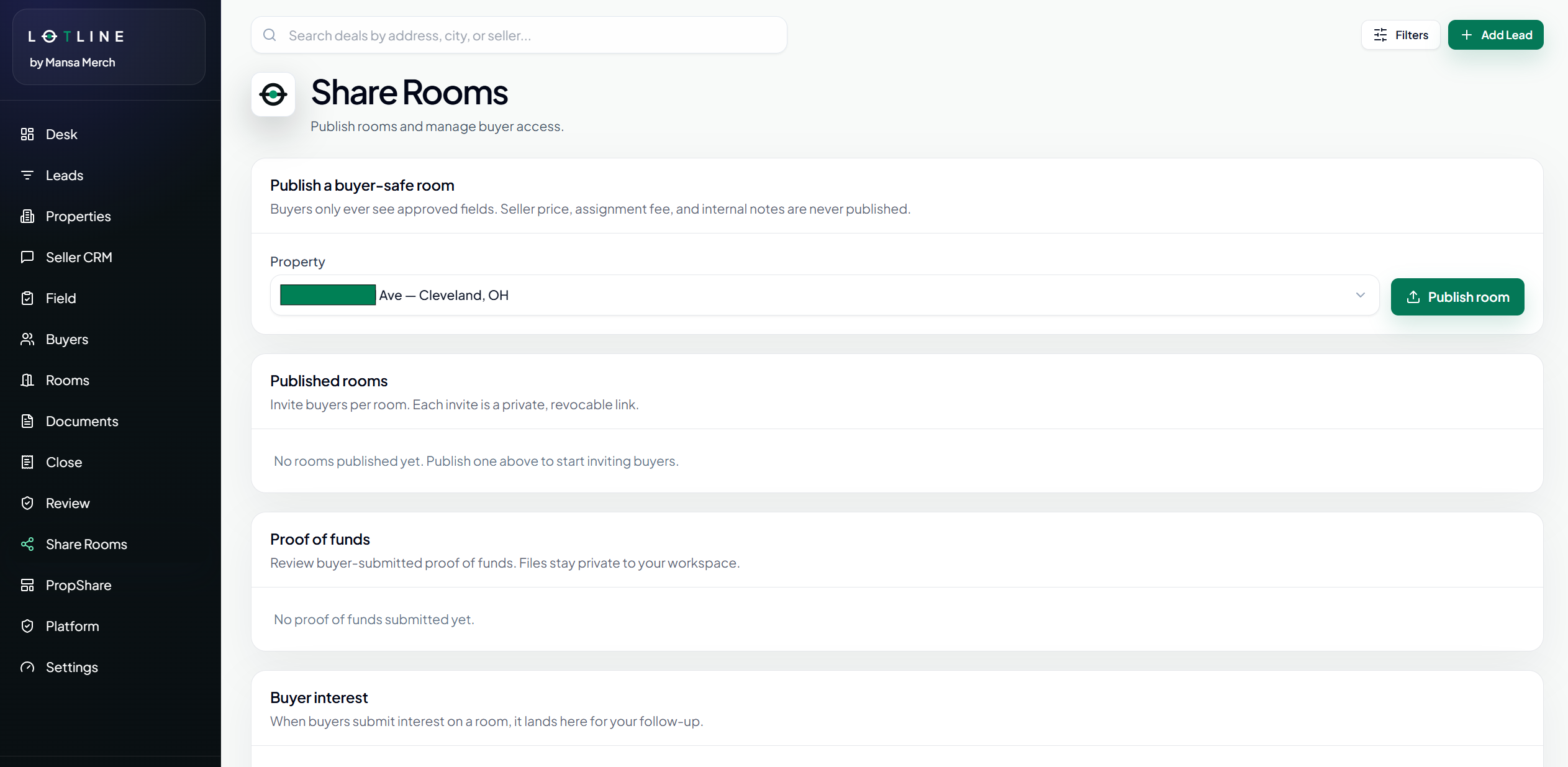
A stale buyer list means deals get blasted to 200 contacts and reach none of the five people who would have bought. LotLine keeps the cash buyer list segmented by market, price band, and asset type, so a deal reaches the buyers who actually want it. That is the difference between a 48-hour assignment and a deal that sits.
Deadline control and document custody
The assignment contract has a hard closing deadline with deposit forfeiture if the clock runs out. LotLine tracks every contract deadline and keeps the deal documents (purchase agreement, assignment, disclosures) in one controlled place, so nothing dies on a date nobody was watching.
Compliance awareness built into the workflow
With states tightening the rules around unlicensed wholesaling and disclosure of intent to assign, LotLine prompts the disclosures and contract structure appropriate to the deal's jurisdiction. This does not replace legal counsel, but it stops the most common compliance failure: simply not knowing what a given state now requires.
LotLine is an operator workspace for screening, underwriting, and workflow discipline. It is not a promise of guaranteed deals, and it does not provide legal advice on licensing or disclosure requirements, which vary by state and change frequently. Operators remain responsible for compliance with the laws of the jurisdictions in which they work. LotLine's role is to make the disciplined path the default path.
LotLine is what happens when field-tested distressed-deal discipline becomes a product. It does not sell the fantasy that wholesaling is easy. It addresses the real reasons deals die (poor lead triage, underwriting drift, stale buyer lists, missed deadlines, and compliance gaps) and builds the fix into the workflow. In a market that is tighter, slower, and more regulated than the wholesaling gurus admit, the operators who run a disciplined process will take share from the ones who improvise. LotLine is the operating system for that discipline.
Why Mansa Merch built this
The same pattern shows up across everything we do: we are strongest where trust is low, documentation is messy, and execution risk sits between parties rather than inside one organization. We saw that in West African export readiness, in Southeast Asian quality verification, and in distressed real estate. LotLine is the productized version of those instincts, aimed at a market where independent operators are competing against tightening conditions with tools that were never built for them. If you are building in a space that needs this kind of structure, that is exactly the kind of work we do.