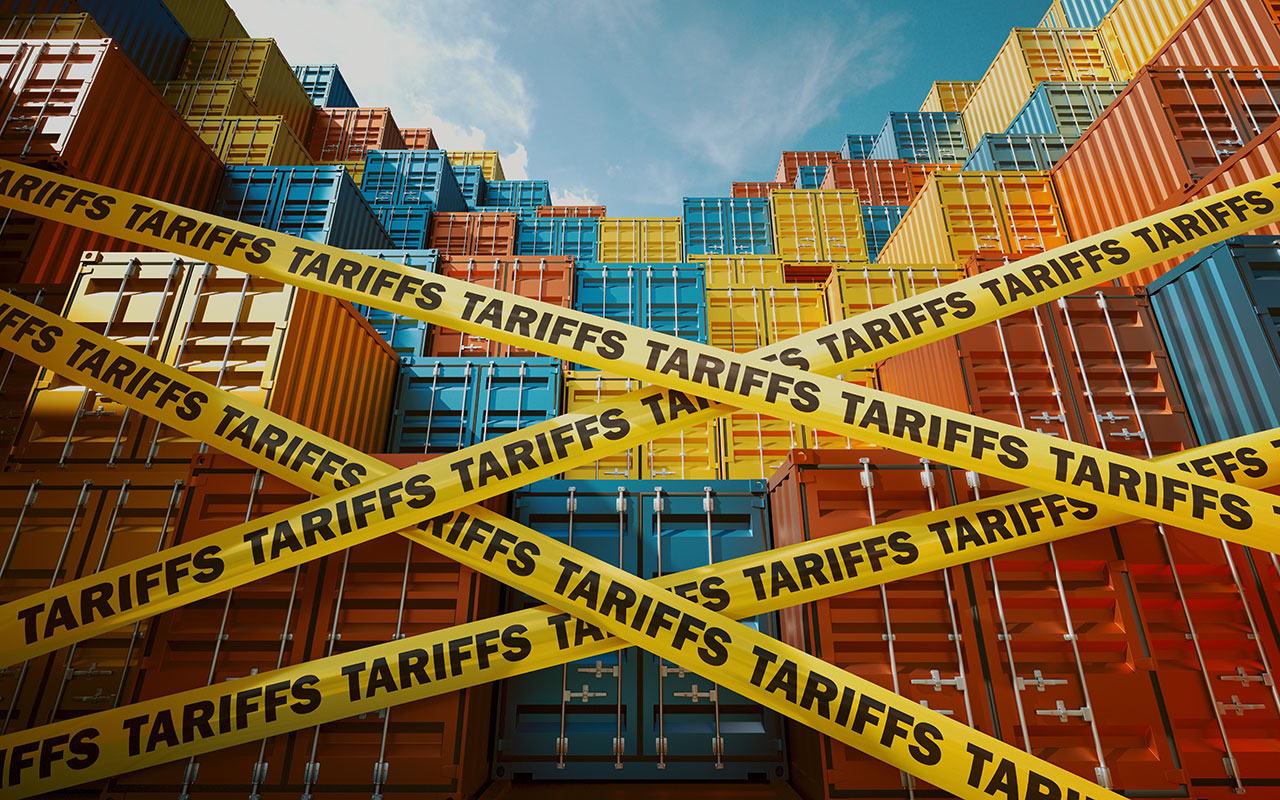
The cost isn't the only thing that changed
When new tariff schedules take effect, the first reaction from most procurement teams is to recalculate landed cost. That's necessary. But it's also the easy part. The harder question is whether the supplier you've been working with for three years is still the right supplier under the new structure.
Tariff changes don't happen in isolation. They ripple outward into lead times, documentation requirements, duty drawback eligibility, and competitive positioning against companies sourcing from different origin countries. A 12% tariff adjustment on a particular HTS code doesn't just add 12% to your cost. It may make an entirely different sourcing corridor more attractive, which means a different supplier, a different qualification process, and a different risk profile.
The scale of recent changes makes this unavoidable. According to the Tax Foundation, the tariffs implemented since early 2025 represent the largest US tax increase as a percentage of GDP since 1993, amounting to an average burden of approximately $1,500 per US household in 2026. For businesses importing raw materials, components, or finished goods, the impact is significantly larger.
The current tariff landscape: what importers are actually facing
The tariff environment as of early 2026 is layered, stacked, and commodity-specific. Understanding it requires looking beyond headlines.
Baseline tariffs
A universal 10% tariff applies to imports from nearly all countries. For specific trading partners, reciprocal tariff rates range higher: 15% for the EU, UK, and Japan under negotiated framework deals; 18% for India; 35% for Canada on non-USMCA-compliant goods; and significantly higher rates for China.
Steel and aluminum
All steel and aluminum imports face a 50% tariff as of June 2025, increased from the original 25% rate. This applies globally with limited exceptions: the UK remains at 25% under a bilateral deal, and Australia maintains a full exemption based on its security relationship with the US. Derivative products, including nails, fasteners, bumpers, stampings, aluminum wire, foil, and tubes, are also covered. For companies sourcing industrial equipment, construction materials, or manufactured goods with steel or aluminum components, these tariffs stack on top of any reciprocal rates.
Agricultural products
Agricultural commodities have seen some of the most volatile tariff treatment. After tariffs were applied broadly in mid-2025, the White House exempted over 200 agricultural product classifications in November 2025, covering items like coffee, tea, cocoa, spices, tropical fruits, and beef. These exemptions recognized that many of these goods cannot be produced domestically in sufficient quantities.
However, the exemptions are conditional on trading partner cooperation, and some major origin countries remain tariff-exposed. Brazilian exports to the US face a 50% tariff on most goods as of August 2025, which significantly affects sourcing calculations for any commodity where Brazil is a major supplier.
The SCOTUS ruling and ongoing uncertainty
On February 20, 2026, the Supreme Court ruled that the President cannot use IEEPA to impose tariffs. In response, a temporary 10% tariff was imposed under Section 122 of the Trade Act of 1974. The long-term implications are still unfolding, but the immediate effect is continued uncertainty, which is itself a cost for importers trying to plan sourcing strategies on multi-year timelines.
What mid-market importers get wrong
Enterprise buyers at Fortune 500 companies have dedicated trade compliance teams and procurement analytics platforms that model tariff impact scenarios before they take effect. Mid-market importers, the companies doing $2M to $50M in annual sourcing, typically don't have that infrastructure. They react to tariff changes instead of planning for them.
The most common mistakes:
- Absorbing the cost increase without re-evaluating the supplier base. This erodes margin unnecessarily when alternative corridors may offer better total landed cost. Fertilizer tariffs alone generated an estimated $110 million in tariff revenue from US importers between February and October 2025, according to NDSU research, with price premiums for DAP fertilizer climbing $172 per metric ton above pre-tariff levels.
- Switching suppliers reactively without running a proper qualification cycle. This introduces quality and reliability risk that often costs more than the tariff savings.
- Ignoring free trade agreement opportunities. USMCA-compliant goods from Canada and Mexico can still enter duty-free for many product categories. Companies not structuring their sourcing to take advantage of FTA eligibility are leaving savings uncaptured.
- Treating tariff planning as a finance problem instead of a procurement strategy problem. This ensures the problem repeats every time trade policy shifts because the supplier base never adapts.
Tariff-exposed commodities and where to source alternatives
The most actionable part of tariff planning is mapping which commodities you're importing, what tariff exposure they carry, and which alternative origin countries could reduce that exposure. Here are real examples across sectors where Mansa Merch operates.
Soybeans
China has imposed additional tariffs of 10-15% on US soybeans on top of existing duties dating back to 2018. The result has been dramatic: China has not purchased a single cargo of new-crop US soybeans for the 2025/26 marketing year, something that had not happened in two decades. China has instead signed supply agreements with Argentina and continues to rely heavily on Brazil.
For buyers sourcing soy-based ingredients, South American origin (Brazil, Argentina, Paraguay) now offers both price competitiveness and fewer tariff barriers in Asian markets. US soybean exporters are diversifying toward Southeast Asia and Africa as replacement markets. Companies that pre-qualified South American suppliers before the tariff escalation are operating with significantly lower landed costs.
Sesame seeds
The global sesame seed market is projected to grow from $14.7 billion in 2025 to $22.4 billion by 2031, according to Mordor Intelligence. The top exporting countries by value are India ($489M), Nigeria ($459M), Pakistan ($414M), Ethiopia ($233M), and Tanzania ($226M), based on 2023 World Bank trade data. China, Japan, and South Korea are the largest import markets, with Asia-Pacific holding 46% of global market share.
For US importers sourcing sesame for food manufacturing, the tariff picture depends on origin country. Nigerian sesame may benefit from agricultural product exemptions, while countries facing higher reciprocal rates may make Ethiopian or Indian-origin sesame more cost-effective on a total landed basis. Africa is registering the fastest growth in sesame exports at 9.8% CAGR through 2031, with Tanzania offering tax incentives for new hulling plants and Ethiopia using warehouse-receipt finance to improve smallholder liquidity.
This is an area we operate in directly. Our ongoing engagement with a Nigerian agricultural cooperative is focused on white hulled sesame seed exports, with buyer connections active in MENA and East Asia. We understand the export documentation, quality specifications (mechanically cleaned, moisture at or below 6%, container-scale capacity with 14-21 day lead times), and buyer expectations in these markets because we are building those trade lanes now.
Coffee, cocoa, and spices
The November 2025 executive order exempted coffee, cocoa, tea, and most spices from reciprocal tariffs, recognizing negligible US domestic production. Key items exempted include bananas, oranges, tomatoes, pepper, vanilla beans, cinnamon, and various nuts, covering 237 product classifications.
However, Brazil-origin coffee remains subject to the 50% Brazil-specific tariff, which significantly shifts the competitive landscape. Vietnamese coffee and pepper, Indian spices (chili, turmeric, cumin), and West African cocoa from Ghana and Ivory Coast all benefit from improved price competitiveness under the exemptions.
McCormick & Co., one of the largest US spice importers, publicly reported raising its gross annualized tariff exposure to approximately $140 million and stated it is pursuing alternative sourcing and supply chain restructuring to offset the impact going into 2026.
For mid-market food importers, the exemptions create a window to diversify toward India for spices, Vietnam for pepper and coffee, and West Africa for cocoa. The risk is that these exemptions are policy-dependent and could be modified, reinforcing the need for multi-origin supplier qualification rather than single-source dependency.
Steel, aluminum, and industrial inputs
At 50% tariff rates on all steel and aluminum imports, with derivatives also covered, any company sourcing industrial equipment, construction materials, or manufactured goods with metal components faces a significant cost layer. Farm machinery imports alone generated approximately $530 million in tariff revenue between February and October 2025, according to NDSU's Agricultural Trade Monitor.
Australia maintains a full exemption from Section 232 steel and aluminum tariffs. The UK has a lower rate of 25% versus 50% for most countries. The EU, Japan, and South Korea have negotiated tariff-rate quotas allowing specified volumes at reduced rates. Shifting to suppliers in these countries, or sourcing from domestic producers where economical, can meaningfully reduce the duty burden.
Building a tariff-resilient supplier strategy
The companies that handle tariff volatility well aren't the ones with the lowest costs. They're the ones with the most optionality in their supplier base.
Step 1: Map your exposure by HTS code
Map every SKU or material to its Harmonized Tariff Schedule code and understand the duty rate for each origin country. The difference between a covered and non-covered product often comes down to classification at the 8-digit or 10-digit level. Getting this wrong means paying tariffs you don't owe, or missing exposure you didn't know you had.
Step 2: Model alternative corridors with real landed cost data
For every tariff-exposed line item, identify at least two alternative sourcing countries. Model total landed cost including the applicable tariff rate, freight differentials, lead time impact, and any FTA or exemption benefits. A supplier that's 3% more expensive on unit cost but sits in a tariff-exempt country may deliver a lower total landed cost.
Step 3: Pre-qualify alternative suppliers before you need them
Identifying an alternative country of origin is research. Pre-qualifying a supplier in that country is execution. It requires factory assessments, sample validation, commercial term negotiation, and documentation setup. If you wait until the tariff takes effect, you're already months behind.
The time to qualify your backup supplier is before you need them. Once a tariff takes effect, every competitor sourcing from the same origin country is running the same search. The companies that planned ahead get priority. The rest get waitlisted.
Step 4: Build FTA and exemption awareness into sourcing decisions
USMCA, the US-UK trade deal, the US-EU framework agreement, and bilateral deals with Japan, South Korea, Switzerland, and others all create corridors with reduced tariff exposure. But FTA qualification requires proper documentation of origin, which means the decision to leverage an FTA needs to be made during supplier selection, not after the shipment arrives at customs.
Step 5: Treat tariff planning as a recurring discipline
The SCOTUS ruling on IEEPA, the temporary Section 122 tariff, ongoing bilateral negotiations, and potential USMCA renegotiation all signal continued volatility. Companies that build tariff scenario modeling into their annual procurement planning cycle will consistently outperform those that treat it as a one-time adjustment.
Tariff resilience isn't about predicting trade policy. It's about maintaining enough supplier optionality that policy changes become procurement decisions, not procurement emergencies. Map your HTS exposure, model alternative corridors with real landed cost data, pre-qualify suppliers before you need them, and build FTA awareness into your sourcing process. The current environment, with rates ranging from 10% to 50% depending on product and origin, rewards companies that built geographic diversification into their supplier base before the rates took effect.
How Mansa Merch helps clients navigate tariff exposure
When we manage procurement engagements for clients operating across borders, tariff exposure is one of the first variables we map. We don't wait for a tariff to take effect and then scramble to find alternatives. We build supplier networks with geographic diversification from day one so that when trade policy shifts, our clients are reviewing pre-qualified options, not starting from scratch.
Our active work in agricultural commodity trade, including an ongoing sesame seed export program connecting a Nigerian cooperative with MENA and East Asian buyers, gives us direct operating experience in the exact corridors where tariff policy is reshaping trade flows right now. We understand the documentation, the quality specifications, and the buyer expectations in these markets because we are building those trade lanes, not just writing about them.